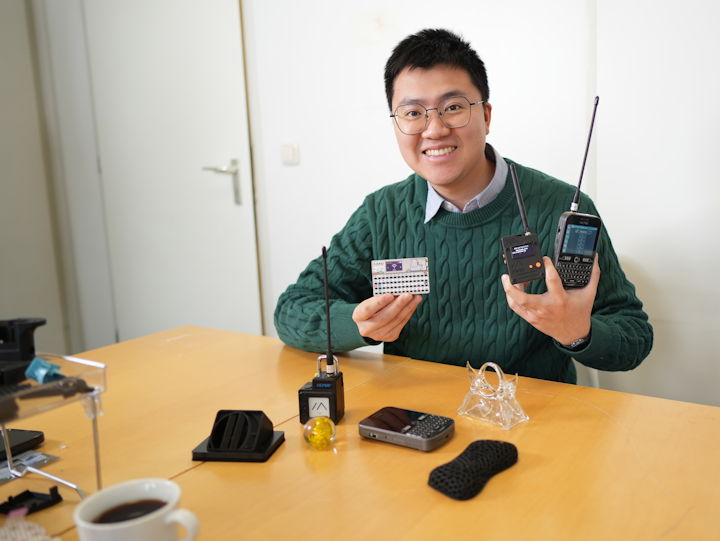
Located in the heart of Munich’s technology scene, OpenELAB in Germany is part of the growing European maker ecosystem, offering technology equipment for makers, educators, engineers, and Universities.
As a Munich local and fan of their hobbyist hardware, I wanted to go behind the storefront. I’m thrilled to announce that I sat down for an exclusive interview with European OpenELAB Founder and Managing Director, Ping Chen, to discuss the Do It Yourself revolution and the evolving future of open-source hardware. This is the first part of the interview, here you find the second part.
“We make Technology boundless” and “Create, Share, Inspire, Repeat” are the slogans of OpenELAB
In my words:
OpenELAB aims to empower people to build and innovate with technology without limits. By promoting modular, standardized interfaces and open-source hardware, OpenELAB helps reduce complexity and lower development costs. Ready-to-use reference designs are intended to accelerate prototyping, while a community-driven ecosystem encourages knowledge sharing and broader access to innovation.
OpenELAB brings together technologies such as AI and IoT (AIoT), robotics, Meshtastic, 3D printing, 3D scanning and other DIY electronics. In addition, OpenELAB provides tools and resources that help to “make technology boundless”.
Interview Overview
Ping Chen, born in Shenzhen to parents who were active in the Huaqiangbei electronics market, developed an early passion for technology. In 2014 he moved to Germany to study industrial logistics in Bremen, later completing a Master’s degree at the Technical University of Munich. After work in China’s AI and electronics sector, he founded OpenELAB, building cross-border supply chains, and a Munich warehouse to serve Europe.
1. Roots in Shenzhen: A Family Business in Electronics
2. Choosing Germany: A Mix of Travel, Education, and Industry
3. From Consulting to Building: The Path to Munich
4. The Hackathon Spark: Winning with Engineers and Storytelling
5. The Birth of OpenELAB: From Customer Projects to a Mission
6. Gaining Experience and Finding a Co-Founder in China
7. The Pivot to a German Warehouse: Solving the Speed Problem
8. Real-World Applications: From Mountain Rescue to Pest Control
9. Inside the Hardware: A Peek at the Mice Sensor
10. The IoT Platform Question: Current Plans and Future Visions
11. Beyond Mice: Partner Projects in Solar Energy and Smart Homes
12. A Family Affair: Florence’s Role and the Power of Family Support
Interview
1. Roots in Shenzhen: A Family Business in Electronics
Chris: Please tell us about your family and education, and how you came to Germany.
Ping: My name is Ping Chen and I was born in Shenzhen. My parents are actually in the electronic industry, when Shenzhen started one of the largest electronic markets in the world in the subdistrict of Huaqiangbei, maybe you have heard of it, the Huaqiangbei Electronics Market. It’s a bazaar for all electronic components because at the time in China, there was a ban of importing electronic components, except for one company who has the right to import. But that is not enough for a growing economy like China back at the time. There are many dealers of electronic components at the time. My parents joined the industry, and I think I got influenced by that. In my study, I’m also was interested in technology. After finishing high school, I came to Germany for my bachelor’s in Bremen studying industrial logistics.
2. Choosing Germany: A Mix of Travel, Education, and Industry
Chris: When exactly did you move to Germany?
Ping: I came to Germany in 2014. My brother is now in the US, in Washington DC, and running the OpenELAB warehouse in the United States. We may have a strategy to just spread. One big reason is I love to travel, and traveling in Europe is just much more fun than traveling in the US. I think in Europe, after several hours, you’re in another country with different culture, and you experience so many different things, like food. I think that’s very fun at the time when I was young. So I decided to come to Germany. Of course, the economy, the industrial environment in Germany is also the best among Europe. That’s another reason to come. In Bremen, it was a university who allow students only speaking English. So it’s an international university in Bremen. At the time I was studying logistics and industrial engineering, coupling with some basic programming and CAD design. Also business models, a bit of everything.
3. From Consulting to Building: The Path to Munich
Chris: I’m curious. What was the main reason you came to Munich?
Ping: What we do now is also a lot relating to international logistics, warehousing and everything. In Bremen, I got the basics of how a warehouse works and why we need a system and everything. That helps a lot with what we’re doing right now. After bachelor in Bremen, I joined a consulting company, but after a while I figured out I wanted something more hands-on, more relating to physical products or actually running a business. I joined the Technical University of Munich for my master’s in innovation and entrepreneurship. But for Technical University of Munich, every business administration (BWL) student needs to study at least half of the course in technology. That means I had to. Which was good. Which is good. I volunteered and was forced to learn about analog electronics, AI, some basic of algorithm. Also, a lot of courses we did, were to build prototypes. That’s also one fun experience I had, really using Arduino, Raspberry Pi, and all the modules to build something out of imagination.
4. The Hackathon Spark: Winning with Engineers and Storytelling
Ping: I joined the program after I participated in one hackathon called TechFest Hackathon. I joined a team. All the team members, except for me, were all engineers. They were very good at what they have done. At the time we were working with Osram, and they built a Google Assistant to control the window and to read temperatures, working with the sensor to detect whether people are at home, in the office and so on. With that we won the first prize. They are very good engineers, and I’m good at telling the story. That’s also how I got started with really building things and making things. In the university we also had the courses to build projects with Infineon and so on. That’s really the start of OpenELAB. I had the idea over there in the university, because when we’re building things, we realize a lot of them are coming from AliExpress or from China. And it’s not easy to get them here in Germany. It was the beginning.
5. The Birth of OpenELAB: From Customer Projects to a Mission
Chris: What were the first steps of OpenELAB?
Ping: Then I went back to China to work for some years in an AI robotics company to help them to expand to Europe and also to work with European partners to land on some projects. I also worked for some electronic component distributors. Actually, the largest one in the world at the time. Then I also got more experience with electronic components. But then in the end, I realized my passion is how to use them, not just selling the chips, but really know how to put them into projects to use. At a time we also had some friends in Germany who were doing a startup, and they were looking for support in the supply chain in finding some components or customization of some parts. We actually started with some customer projects before we founded an online shop. With that, we think it would make sense that we can bring a lot of good products from China, from Asia, and also from America to Europe. Then we make them boundless. That’s actually our OpenELAB slogan: we make technology boundless. We want to bring them everywhere and make it easy for people who can experiment with it to learn how to use it. That’s our mission now.
6. Gaining Experience and Finding a Co-Founder in China
Chris: In total, how many years have you spent in Bremen, in Munich, or in Germany before going back to China?
Ping: Almost six years. So, I speak a bit in German.
Chris: How long have you stayed again in China?
Ping: In China, I stayed three and a half years, where I met my wife Florence. We got married there, and we came back to Germany last year, August. That was also when OpenELAB was founded. We just started a company in Germany and in China, but in the beginning, we don’t have a warehouse in Germany. We just have everything in Shenzhen. When a customer orders, we just send them over from China to other countries. But it takes too much time. Actually we had customer feedback that the time is too long, and they want it to be faster. We made the decision to open the warehouse in Munich. We came back and then we started with several racks. Now we have 900 products in Munich.
7. The Pivot to a German Warehouse: Solving the Speed Problem
Chris: So it means it was originally your business idea. For the setup of the company here in Germany.
Ping: Yes. We realized we need to have a German warehouse and also a German company. For the import and also for customer service, for delivery speed, everything would be much more helpful for our customer if we have a German warehouse.
8. Real-World Applications: From Mountain Rescue to Pest Control
Chris: Could you please tell me about some practical applications of your products?
Ping: Recently, we were discussing with several guys who are former military people, and they are also using off-grid communication in different scenarios. In Germany. Which would be the best setting for different scenarios. For example, mountain rescue teams for ski people or mountain people very often get no signals in the mountains and need something like Meshtastic, very easy to work with. Especially the SenseCAP Tracker, the small card is waterproof and the battery lasts very long. I don’t have it here right now. That is very easy because everybody has a pocket. They just put it in the pocket, and then everybody can have access and they see the GPS coordinates very easily. They send signals. For different applications, I think Meshtastic is really helpful to lower the barrier for many people to use them, because in old times, for ham radio or everything, it was not easy to operate.
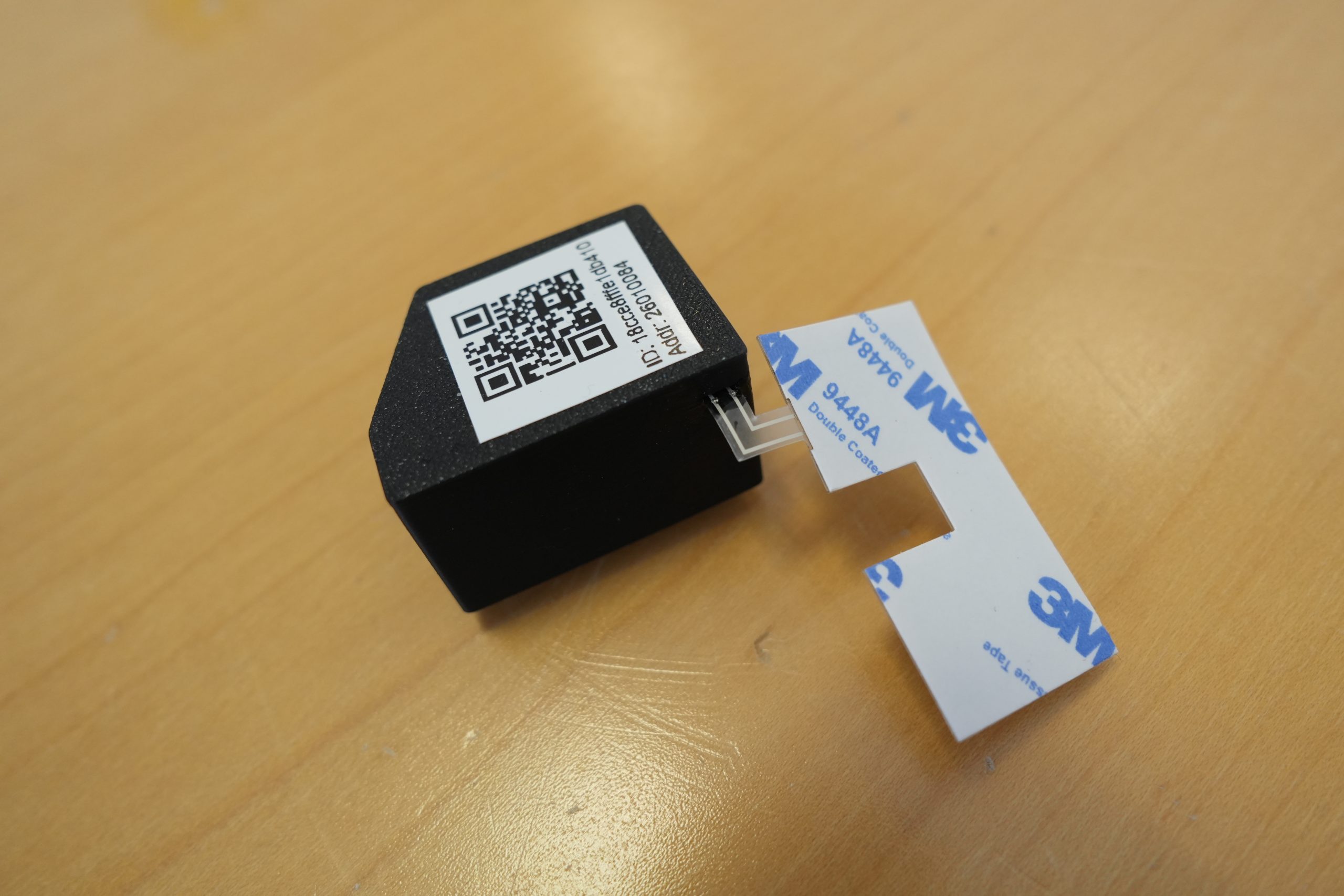
With a walkie-talkie, that’s okay. But you lose the signal and you don’t have the GPS coordinates and everything. I think the Meshtastic technology is bringing new knowledge to people who had no idea about IoT before. Now they read about Meshtastic and they think actually it’s very easy, and we can do many things with something similar to Meshtastic now. That is also good. For us, we are also experimenting on LoRa, on LoRaWAN. This project I was just telling you, is using one pest sensor we developed. We have several ones. We developed with a company that is doing pest control. This is a sensor to detect mice, and it will send a signal. To detect mice, very small mice. When they read a signal, it will send it to the gateway via LoRaWAN and to our server.
Chris: Then they send in the Boston robotics dog?
Ping: They will very likely send someone to take care of it. We’re experimenting with the new device. And the mice detection device is very inexpensive, which makes it suitable for deployment in higher numbers.
Chris: What were the development challenges from prototype to product?
Ping: We tried to do it with LoRa in the beginning, even design our own gateway, our own sensor, but they never connect. It’s not, like you said. Working with IoT from concept is easy, but when you actually put them in larger scale, it’s very difficult. We started with LoRaWAN, and it’s working now pretty good. Just the cost of The Things Network and so on. We’re thinking about if there is another solution we can switch to. To lower the cost of the platform operation. Similar problem with MeshCore. Maybe one day they charge, I don’t know how much Euro for the day.
Chris: Lets talk about the potential of semi-industrial IoT Solutions. I know AWS IoT, which in my opinion, is suitable for Industrial IoT projects. There’s also Azure IoT. You have the IoT cloud. You have the IoT edge computing like AWS IoT Greengrass in manufacturing sites, which is different from IoT end devices. AWS IoT Edge Computing is IoT for a local site doing IoT even when a factory is disconnected to Internet for a while. And then you have the IoT devices itself which slowly but surely move towards AIoT with local AI inside. But industrial IoT platforms are, in my view, expensive and if you do not select platform features carefully, you are locked into the details of specific IoT platforms, like AWS IoT Lambda or Azure IoT Functions.
And you will have challenges to fully understand the monthly invoices you get. There are many mini invoice items, such as how many seconds a certificate was available, and other details about IoT services. Even if you have a smaller IoT project, you get many pages of monthly invoices with many items. In my opinion, It’s difficult to calculate the running cost of a professional IoT platform in advance. And in my experience, there’s often a bigger total cost of running an professional IoT platform, than expected.
Which means, with MeshCore and Meshtastic, maybe in two, three years, there are some first professional solution companies. Which will provide professional support. You get a service and some kind of a service level agreement, but probably at a much lower price level. For non-industrial IoT projects, which you probably couldn’t afford doing with AWS IoT or Azure IoT. That’s, I think, the evolution of IoT, to really bring it from high-end companies or high-end applications to middle and small, medium-sized companies or even households can benefit from it. Or semi-industrial IoT e.g., for smaller smart farming or precision agriculture projects.
9. Inside the Hardware: A Peek at the Mice Sensor
Chris: Please tell more about OpenELAB’s sensor solution and engineering approach.
Ping: The mice sensor solution we now develop is running on battery, and we estimate the battery could run for maybe half a year to one year without recharging. Which is quite good. And the battery can be recharged and be replaced. You can recharge the battery, and then you just bring a new battery, put it in, and it’s finished.
Chris: What’s the sensor to find out it’s a mouse?
Ping: It’s just a pressure sensor. It’s just that when a mouse steps on it, it sees. In other applications, we can easily replace this sensor with other sensors, and then you get triggered by lower temperature or triggered by some other incidents. Also the sensors send a heartbeat package every 24 hours. If we put in a temperature and humidity sensor, it will report more often than every 24 hours. To see it’s still in operation. That’s actually also the advantage of us redistributing all these modules. We made it to build a prototype with Seeed Studios’ products and other companies’ products easily in a month. Then we test out the idea. Then we design our own PCB board with their modules to really accelerate the development process. A prototype and the industrial product are very different. In industrial products, you need to consider power consumption, you need to consider humidity. You may destroy the device, and many issues. It’s a good learning process for the company. Actually here in Munich and in China, we have our own engineering team to design the electronics, write the software, and so on. It’s a fun process. A lot of learning.
Chris: How many employees has your Chinese headquarter?
Ping: In China we have 14 employees right now. We expect to have maybe around 20 employees next year.
Chris: I saw in the OpenELAB brochures that your entire staff is academic, and some of them are Ph.D.s. Is that correct?
Ping: Most of us have basic technical education and background. For electronic engineering, I don’t know. Maybe at your time, I think the education was better than right now, because we work with a lot of students, and they have no idea how, besides the textbook, besides the slides from the professor, how things are working properly. How to write a code, how to make things connected. When they use our product and start to get hands-on, they learn so much compared to in the university on really building things.
Chris: I believe it’s important for customers to know some interesting details and not being an anonymous delivery partner, but somebody who might find interesting new products for you like the mice sensor.
Ping: I just want to open the mice sensor device for you, so you can also see what’s inside it. Easy, huh? You see. Just a button on the top. Inside is the battery. Actually the controller is an ESP32-S3 with the SX1262 for LoRa. Many people are using them for Meshtastic, and we just use them for LoRaWAN. It’s running on LoRa frequency, so it’s no problem.
10. The IoT Platform Question: Current Plans and Future Visions
Chris: But what IoT platform or middleware you’re going to use to utilize the mice sensor?
Ping: We get a lot of support from the open community. For the software, we also need to find our own solutions for low power management, and also how to transmit the data to the middle platform and to the backend, and so on. With Meshtastic, you get good communication. You could transport the sensor data. We are thinking maybe in the future we can bring a Meshtastic version of this mice sensor solution because now it’s running on LoRaWAN, and it’s not technically a mesh network. There will be a receiver, and everybody is just sending the receiver the message. The gateway has a 4G internet. It will send the data to our cloud. That’s the very basic IoT setup, I would say.
11. Beyond Mice: Partner Projects in Solar Energy and Smart Homes
Chris: But how to implement a solution with the mice sensor? What is your plan? How to implement the IoT features for implementing the solution logic? If you want to implement e.g., a precision agriculture solution which detects that the moisture level on the fields is very low. Then you get the data in some kind of edge computing logic which decides to start a water pump. To get water into the field. This is IoT solution logic. Do you plan to implement the IoT and solution logic as handwritten code or do you plan to get an suitable IoT platform or middleware to implement both?
Ping: Right now we are just in the early stage of this product. The company who uses the product will decide what to do next with the data. Right now it’s not yet running on live AI. We have another project with our partner company over here. They’re a manufacturer of this balcony solar power system, the batteries. We developed a product to communicate with the inverters because they need to control the power output of the inverter to give back to the home. Right now we have this communication module, like a small router. The partner company is developing the algorithm behind it. For example, when there’s good sun, they would charge the battery.
Once you start using your household appliance like washing machines and so on, the reader of the power meter will tell the system, tell the edge computing module that now people are using the electricity. Please increase the output power of the inverter. This is the logic of the solution. They also need to calculate because now the electricity prices can now change throughout the day. I think they are also going to introduce the dynamic pricing of the electricity. They would also check: if electricity is in the low price, just use the grid or even load your battery. When the electricity price is high, you can send it back to the grid and then you can sell the electricity also. It’s a complex system running on it. We will, I think in the future, also look into that field, maybe not in solar energy, but maybe in agriculture, for example, would be very interesting.
12. A Family Affair: Florence’s Role and the Power of Family Support
Chris: Florence, when did you come to Germany?
Florence: I came last year. I have another master’s degree from Munich Business School. It is a private school here. I was an English teacher for a very long time before that. My mom was born in ’63. I had another master’s from Columbia University, so I was in New York City for some time. Then I went back to China because of COVID-19, and Ping and I met each other. It was kind of a blind date arranged by our parents, and it worked out. We are going to have a baby soon.
Now I am the head of technical marketing at OpenELAB. I mostly take care of the social media part. That’s why I only have the phone, not a camera. We reach out to influencers on YouTube, TikTok, and other social media platforms. We focus mainly on those with around one thousand followers who are makers or students wanting to share something. We give them sponsorship, they give us videos, and we co-create together. We promote them on our platforms. We also do promotional activities and sponsorship for schools and universities. For example, if they have projects or workshops, we offer services to let future engineers know about us and use our products. That is basically what I am doing right now. This makes a difference, especially for a startup.
Chris: What differentiates you from the others? Raspberry Pi is probably the oldest, best-established platform in Europe. What you are trying to do is bring some added value.
Florence: Exactly. That is the marketing part. If you go online, whom do you pick and why?
Chris: Why did you found OpenELAB?
Ping: Sherwood is a distributor in Hong Kong with over 20 years of experience. Our main investors are my family and my partner’s family. My partner’s father and my father were startup founders when they were young. They started their businesses in their twenties. They have their own companies but are still in a very good relationship, so we have known each other for a long time.
Ping: When I had the idea to bring good products together to offer engineers worldwide and accelerate the development process, my partner said, “Let’s try it,” and we started the journey. He is now the manager for our Chinese branch, managing all colleagues and activities there. This gives me the time and energy to manage what is happening here in Germany.
The Chinese part is a very important part of our operation because our website management, product sourcing, and communication with manufacturers happen there. This is our advantage; when a customer in Europe asks a question in the evening, our Chinese team is awake to contact the manufacturer and figure out the problem. The manufacturer gets back to us when we wake up.
It is a high-efficiency process. We communicate with manufacturers like M5Stack, Lilygo, Seeed Studio, and Heltec on a daily basis. If a customer has a problem, for example, screws rotting in the rain on a solar product, we give feedback to the manufacturers. We offer replacements or find the best way to help solve the problem. With offices in Europe and China, we offer very good service to our customers.
Chris: You have a distribution company in the US as well?
Ping: Yes, my brother is joining us next year full-time. It’s a family business. He studied finance, but for him, it is a family tradition to do something with electronics. We have an office in California (west coast) and one in Virginia (east coast). We will move our warehouse so we have two in the US, one in the West and one in the East, for better logistics efficiency.
Chris: You must be a lucky guy having a good idea and getting family support!
Ping: They are very supportive because they used to do a lot of trading without the value-adding part. When we founded the company, we thought about that. As just a distributor or trader, there is less value-adding because, with the internet and AI, people can get information anywhere. We think of different ways to really help our customers.
Chris: Do you remember the first product sold in Germany or Europe?
Ping: The first product sold in Europe by OpenELAB was an M5Stack computer. It is still one of the most famous products on our website. The first customer was an engineer from Microsoft in Ireland. We started building the website in April last year and received the first order at the end of June. We were very happy it finally worked out. Then we had to figure out how to ship to Ireland. Slowly we got more orders.
For me, a very important value for our team is honesty. As a company, we want to offer value and help accelerate the development of electronic products, smart homes, or DIY projects. We want to help our customers to do it easier and faster.
In the first few months, we didn’t have the German warehouse yet. We had customer complaints that it took too long to ship from China to Europe, and customs were complicated. We rethought our operation and concluded that having a German warehouse is a must, at least for the European Union. It wasn’t an easy decision because we had to figure out importing, building a warehouse, and running the system.
In the beginning, when we received an order, we went to the DHL website and entered customer information manually by copy-pasting. That was okay with five to six orders a day. Now we have 50 to 60 orders daily from Europe and soon Turkey, so we cannot do it manually. We needed a system to manage inventory and connect customer orders to DHL. It took us three months to finalize the process.
This helped us recently because we had 30% growth in November 2025, and we expect similar growth next year. We are getting new manufacturers on our website, not only in IoT and DIY electronics but also professional robotic companies, motors, sensors, actuators, and industrial components. We expect to double the products we offer. Therefore, we need a bigger warehouse; the current one is a limitation and might only be enough until the middle of next year.
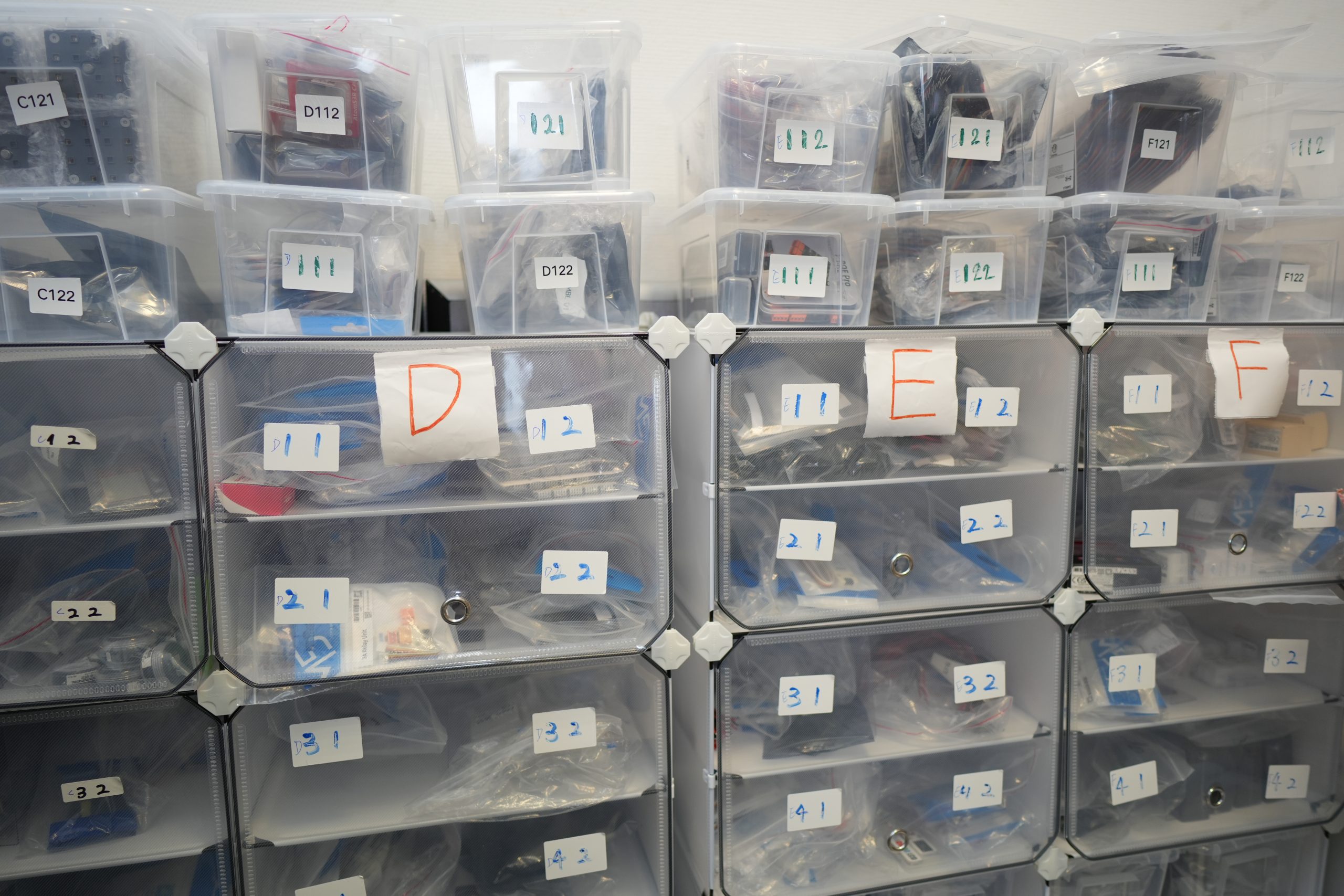
With the German warehouse, we import to Germany first and then send out to all of Europe very fast with DHL. We are increasing the stock in Munich so makers can buy products from different manufacturers, sensors, cameras, displays, in one place and receive them quickly. That really adds value.
What is the difference between us and other distributors? Anyone could build a warehouse and sell stock. We concluded that showing people how it works and helping manufacturers improve products is vital. When we try different products, we often realize the tutorials offered by manufacturers are incorrect or missing something, and we tell them to fix it. We identify real problems customers might have and give feedback.
We also release tutorials on GitHub. We want to bring our experience to help makers and engineers. Since we have everything in stock, we combine different products to make ideas work. This inspires people despite there are so many electronic modules, and often people don’t know what to do with them. When we use them in fun projects, people realize they can use them professionally or at home. Our slogan is: Create, Share, Inspire, Repeat. We see ourselves as more than a distributor; we help companies and individuals realize ideas.
The sensor project involves a client passionate about electronics who wanted to make their operation more efficient. He contacted several design companies, but it was difficult for them to bring hardware and software together. After one year of communication and iteration, we came to a semi-finished version, which had been his dream for 10 years.
We believe these projects help people make life easier. In this project, the pressure sensor and antenna are inside a box that looks like a mousetrap, so nobody sees the difference or steals it. We only used the LoRa antenna because we didn’t need the WLAN function. An important point was making it as low-cost as possible for mass-scale application. Other companies offer similar products for 50-60 Euros, which is too much.
Chris: What is the biggest “aha moment” in the last few years, personally or company-wise?
Ping: Personally, the biggest “aha moment” was the news that my wife is pregnant. It was a very interesting experience. We were in Turkey visiting a partner and family friend to discuss business. We learned his wife was pregnant, which was a surprise to us. We were enjoying ourselves in Istanbul, and after returning, we had the Maker Faire Solothurn in Switzerland.
While we were busy packing, the news came. That night, we knew we might have a baby, but we still had to pack for Solothurn until 1am. The next day we drove six hours to Solothurn. My partner, Florence, stood there all day introducing OpenELAB to makers in Switzerland. It was our first time selling at a Maker Faire, and it was a great success. We believe the baby brought a lot of luck to the company.

Chris: Thank you Ping, for the interesting interview.
This blog post is the first part of the interview, here you can find the second part.
Comments are welcome
Constructive comments (via the comment function at the bottom of this page) are greatly appreciated and suitable changes and additions to this blogpost will be taken into account. All statements in this blog post reflect the personal opinion of the author, which may not always be accurate due to incomplete information and are not factual claims.
Please note that comments are subject to manual review to prevent spam, which may cause a delay in their display.
Shortlink
For easier sharing and access to this blog post, use this short link: https://elab1.ai-tec.eu